

– Alamgeer Hossain
Authoritarian ruling regimes invariably seek to establish a particular narrative through the media and official state discourse and repeatedly attempt to control history. Why do they always seek to redefine or control history? George Orwell provided an answer to this question in his famous novel Nineteen Eighty-Four (1984). He wrote: “Who controls the past controls the future; who controls the present controls the past.” In other words, those who control the present can also control the interpretation of the past; and those who can control the past are able to influence the thoughts, consciousness, and direction of future society. In his novel, Orwell showed how, in their obsession with preserving power, authoritarian regimes attempt to take control of the intellectual and cultural spheres; how, in the name of protecting the political interests of the state, they seek to control people’s memory and consciousness by rewriting history, concealing information, and disseminating propaganda. They tamper with history, and in the process a fictional narrative emerges—one shaped according to the rulers’ preferences. Eventually, the situation can reach a point where, through the sheer force of power, people begin to accept even various unethical actions committed by those in authority as normal. In other words, through controlling history, authoritarian regimes do not merely interpret the past; they also attempt, to a considerable extent, to determine how future generations will think, what standards of truth they will use, and within what boundaries they will assess political realities. That is why, when ruling regimes begin to control people’s memories of the past, people gradually lose their ability to verify the truth for themselves.
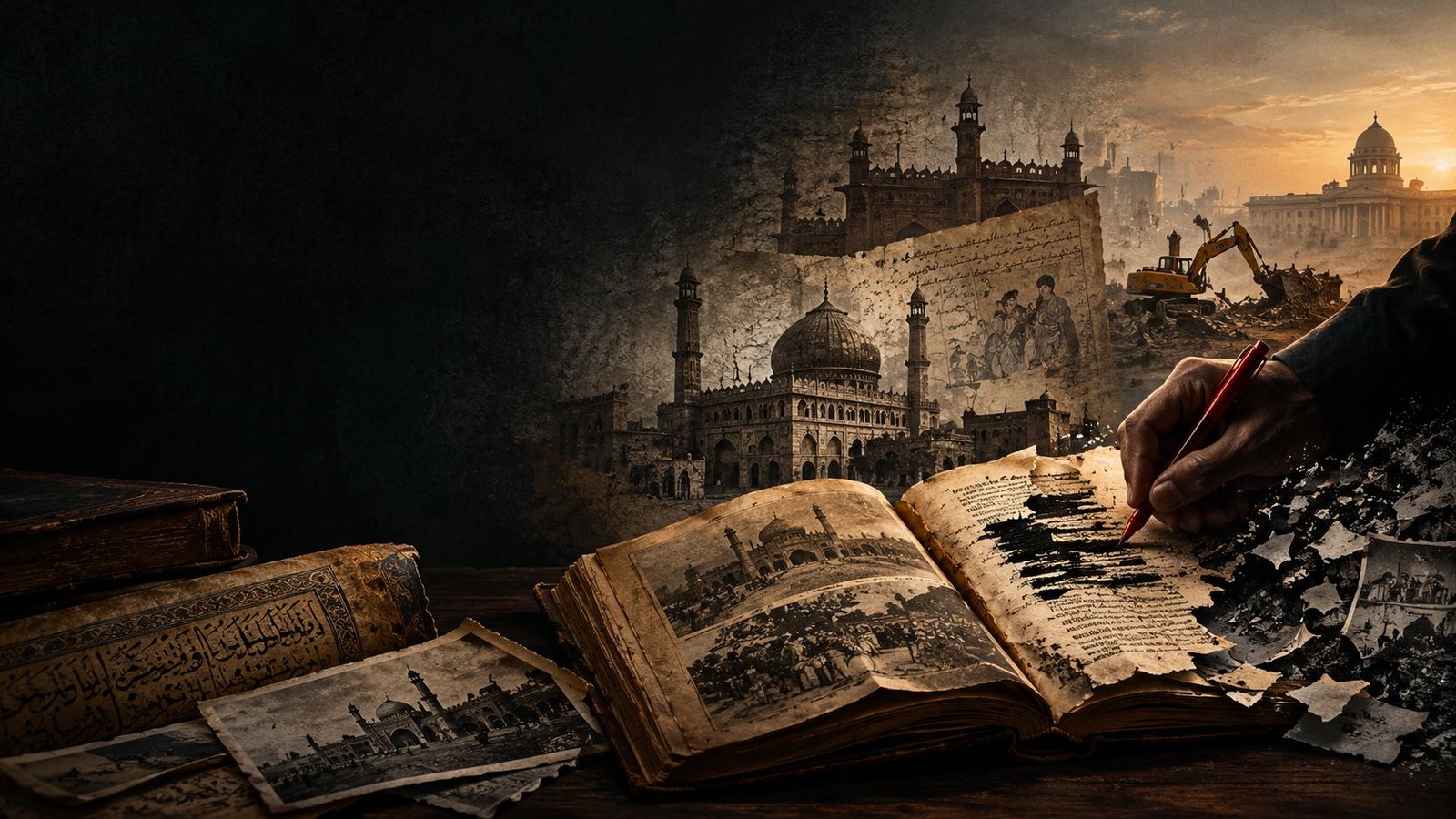
Throughout history, authoritarian rulers have written history in their own way to control it. After Vladimir Lenin’s death in 1924, Stalin rose to power in the Soviet Union. Once he consolidated his position, Stalin began an extensive process of rewriting history. Revolutionary leaders who had once played important roles in the Bolshevik Revolution but later became Stalin’s political rivals were gradually erased from history. They were removed from old photographs through cropping and manipulation; books and newspapers were altered; and even school textbooks were rewritten to incorporate new interpretations. As a result, over time the people of the Soviet Union were taught a version of the past in which Stalin was presented almost single-handedly as the defender of the Soviet state and the principal hero of the revolution.
Similarly, in Nazi Germany, Adolf Hitler used “history” as a tool for establishing German nationalism and racist ideology. The Nazi media system portrayed Germany’s past in such a way that the German nation appeared to be a “superior race” that had been weakened by conspiracy and betrayal. Jews and political opponents were blamed for Germany’s defeat in the First World War. Through various forms of propaganda, people were persuaded that these groups were responsible for Germany’s defeat, economic crisis, and weakness. As a result, hatred and a desire for revenge against them gradually developed. The Holocaust subsequently took place.
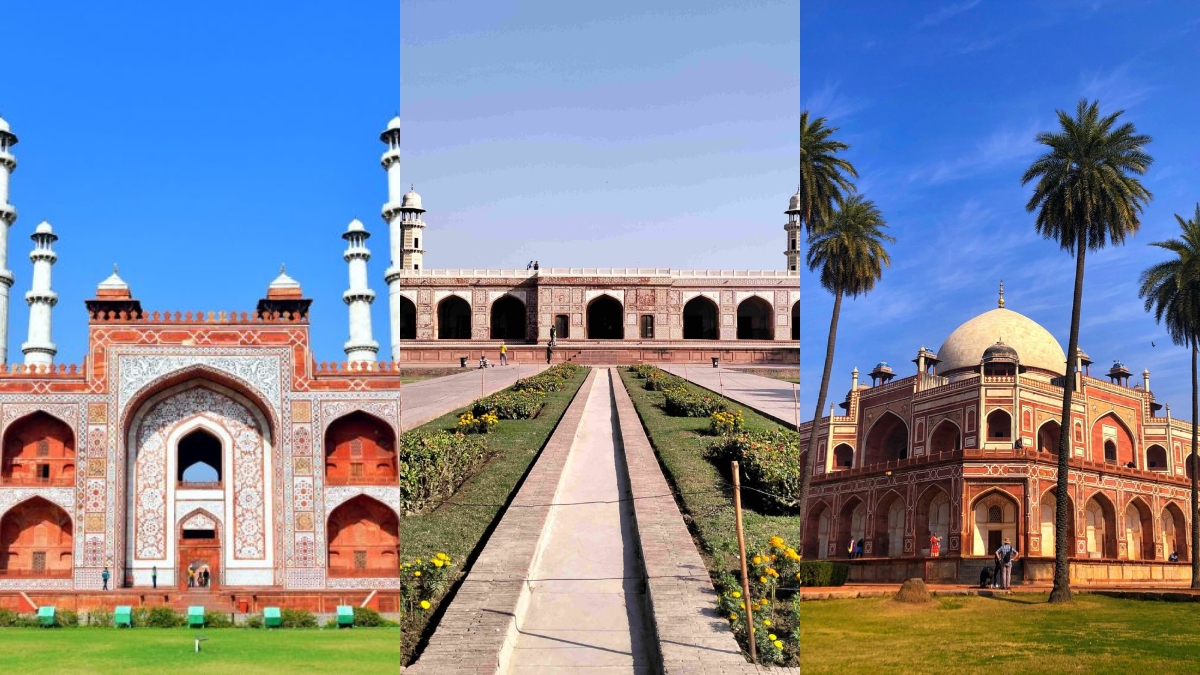
Chapters on Mughal History have been dropped from the curriculum, despite the Mughals ruling India for over 800 years
Even today, ruling regimes in various countries continue to attempt to control history. In our own country, too, the rewriting and selective editing of history are taking place. The history of Muslims’ contributions to India is being removed from the curriculum. On the pretext that the Mughals were outsiders, the contributions of Muslims are being denied one after another. While the ancestors of those who are now cutting down and distorting Muslim history once worked in cooperation with the British, their history is today being proudly highlighted. If the situation is not addressed promptly and effectively, and an appropriate strategy is not adopted to ensure an accurate representation of history, there is a risk that future generations will be presented with an increasingly limited and distorted portrayal of India’s history. With the passage of time, there is a growing likelihood that this distorted version may come to be accepted as historical fact. Therefore, the first thing we need to do is raise our voices against the abhorrent politics of historical manipulation that is being pursued and bring the true history before the people by refuting distorted historical narratives. Secondly, from the standpoint of necessity, even if we are compelled to study this distorted version of history in schools, colleges, and universities, we must simultaneously, as conscious members of the Ummah of Muslims, study the true history of Muslims in India. We must critically examine, with documentary evidence, the false history they present under the guise of truth, and whenever the history of Muslims and Muslim rulers is presented in a distorted manner, we must provide a decisive response.
Another enduring characteristic of authoritarian ruling regimes is that they employ various methods of persecution against a particular religious group or ideology which they perceive as a threat to their rule. Sometimes, through the enactment of various laws, they attempt to create obstacles preventing the followers of that religion from freely practising their faith. At other times, they try to erase important symbols and historical landmarks of that religion from the country. And sometimes, they carry out massacres against members of that community.
In India, Brahmanical forces have, throughout the ages, subjected people to ruthless exploitation for generations in the name of religion and governance. After the arrival of Islam in India and the establishment of Muslim rule, they were no longer able to exploit people on such a massive scale. With the decline of Muslim rule and the arrival of the British, however, they once again gained opportunities for exploitation. Brahmanical or Manusmriti-based ideologues believe that it is impossible to enslave ordinary people and exploit them in the name of governance as long as Islam and Muslims remain in this country. Therefore, proponents of Hindutva ideology have explicitly identified Muslims as the principal obstacle in their various writings. Since they regard Islam and Muslims as an obstacle to their path, they are making every possible effort to eliminate Muslims from India and erase the symbols and manifestations of Islam. At times, various attempts are made to deprive Muslims of citizenship with the objective of driving them out of the country; at other times, Muslims are subjected to mob lynching on false allegations of cow slaughter or cattle smuggling; and at still other times, the media is used monopolistically to spread Islamophobia. Most significantly, all-out efforts are being made to erase Islamic institutions and symbols such as mosques, madrasas, Eidgahs, and Muslim graveyards under various pretexts. “Not three, but thirty thousand” is not merely a slogan of Hindutva forces; its implementation is also proceeding rapidly. Recently, a mosque located adjacent to the Collectorate office in Saharanpur, Uttar Pradesh, was demolished with bulldozers. The demolition was carried out even though copies of the Qur’an were present inside the mosque. Driven by the fuel of impure thoughts, the bulldozer crushed the mosque into rubble, and copies of the Holy Qur’an were left buried beneath the ruins. These days, the destruction of mosques and madrasas has become almost a routine occurrence.

The Saharnapur Mosque demolition is another chapter in the long list of efforts to erase Islamic Institutions
The demolition of mosques in this manner, preventing people from entering mosques, or forcing people out of mosques—all of these constitute fitnah-fasaad, and lawlessness. Islam’s position regarding such oppression, fitnah-fasaad, and disorder is clear. Allah has described fitnah as being greater than killing in the Qur’an:
وَٱلْفِتْنَةُ أَكْبَرُ مِنَ ٱلْقَتْلِۗ
“And fitnah is greater than killing.” (Surah Al-Baqarah 2:217)
One of Allah’s established ways of preserving the world from fitnah and fasaad is that He removes the oppression and power of one group through another group of people. Had He not done so and instead granted one side permanent power and authority, the earth would have become filled with oppression and tyranny. Allah says:
وَلَوْلَا دَفْعُ ٱللَّهِ ٱلنَّاسَ بَعْضَهُم بِبَعْضٍ لَّفَسَدَتِ ٱلْأَرْضُ
“And if Allah did not repel some people by means of others, the earth would surely have become corrupted.” (Surah Al-Baqarah 2:251)
But what, then, are our responsibilities as Muslims? Should we simply sit back thinking that Allah will eventually bring forth some group and use them to repel the oppressors? For a “revolutionary nation,” sitting idle with folded hands is by no means appropriate. Rather, we must strive according to the ability and capacity Allah has granted us. If we have the power to stop wrongdoing with our hands, then we must do so with our hands; and if we have the ability to speak out, then we must speak the truth and stand for justice with our words. Islam has described raising the voice of truth before a tyrannical ruler as one of the greatest acts of jihad. The Messenger of Allah ﷺ said:
إِنَّ مِنْ أَعْظَمِ الْجِهَادِ كَلِمَةَ عَدْلٍ عِنْدَ سُلْطَانٍ جَائِرٍ
“Indeed, among the greatest forms of jihad is a word of justice before a tyrannical ruler.” (Sunan an-Nasa’i)
Secondly, we must strive and struggle for the establishment of Islam, because it is through Islam alone that oppression and fitnah-fasaad can be removed from the world and genuine peace can be established. This is not merely an idealistic notion; history bears witness to the fact that Islam has, in practice, eliminated oppression and disorder and established peace.
Today, in the face of the way Hindutva forces are working to erase the symbols and manifestations of Islam from India, merely issuing press releases, making statements on social media, or writing a few articles is not enough. Rather, setting aside sectarian differences, all Muslims and Muslim community organizations must come forward to work together at the grassroots level based on a “Minimum Common Agenda.” At the same time, dependence on secular political parties must be reduced to “zero.” Spending money, time, and energy on participating in elections is not an effective course of action; therefore, we must also refrain from pursuing that path.
May Allah grant Muslims the ability to protect their lives, property, honour, and dignity, and keep them steadfast upon the Deen. Ameen, Ya Rabb al- ‘Alamin.
