

– Bilal Hasan
When Abhinandan Sekri of NewsLaundry visited the CJP protest at Jantar Mantar, days after the police had brutally cracked down on protesting students marching towards the Parliament House, he described the mood among the Gen Z protesters as “self-motivated.” Recalling his experience covering the India Against Corruption-led protests in 2010, he observed that these students needed little external push to sustain the protest. Everyone was busy creating their own content while remaining united around a common demand: the resignation of Dharmendra Pradhan. Eventually, that demand was met, and the protest concluded following his resignation.
Following the recent protests in neighboring countries such as Sri Lanka, Bangladesh, and Nepal, there has been a growing trend of Gen Z participation in political movements and their subsequent impact on the political dynamics of these countries. They have become known for their unconventional styles of protest, the use of memes to communicate political messages, and their ability to turn social media content into tools of mobilization. India witnessed a similar pattern during the recent CJP protest. While several factors contributed to the movement’s eventual outcome, its distinctive use of social media, memes, and other unconventional forms of mobilization played a significant role in sustaining public attention and momentum throughout the protest.
Muslim youngsters had varied responses to the protests. Some argued that the first Gen Z-led protest in India was the anti-CAA movement of 2020, which was led largely by Muslim youth and was unique in its own way, although its ultimate outcomes remain a matter of debate. Others commented on the “first-timers” who had witnessed police action, remarking that Muslims were already accustomed to the kind of treatment they were experiencing. Some questioned the participation of Muslim protesters such as Junaid and asked why they needed to be part of the protest. Others remained aloof, choosing instead to wait and watch how the situation unfolded.
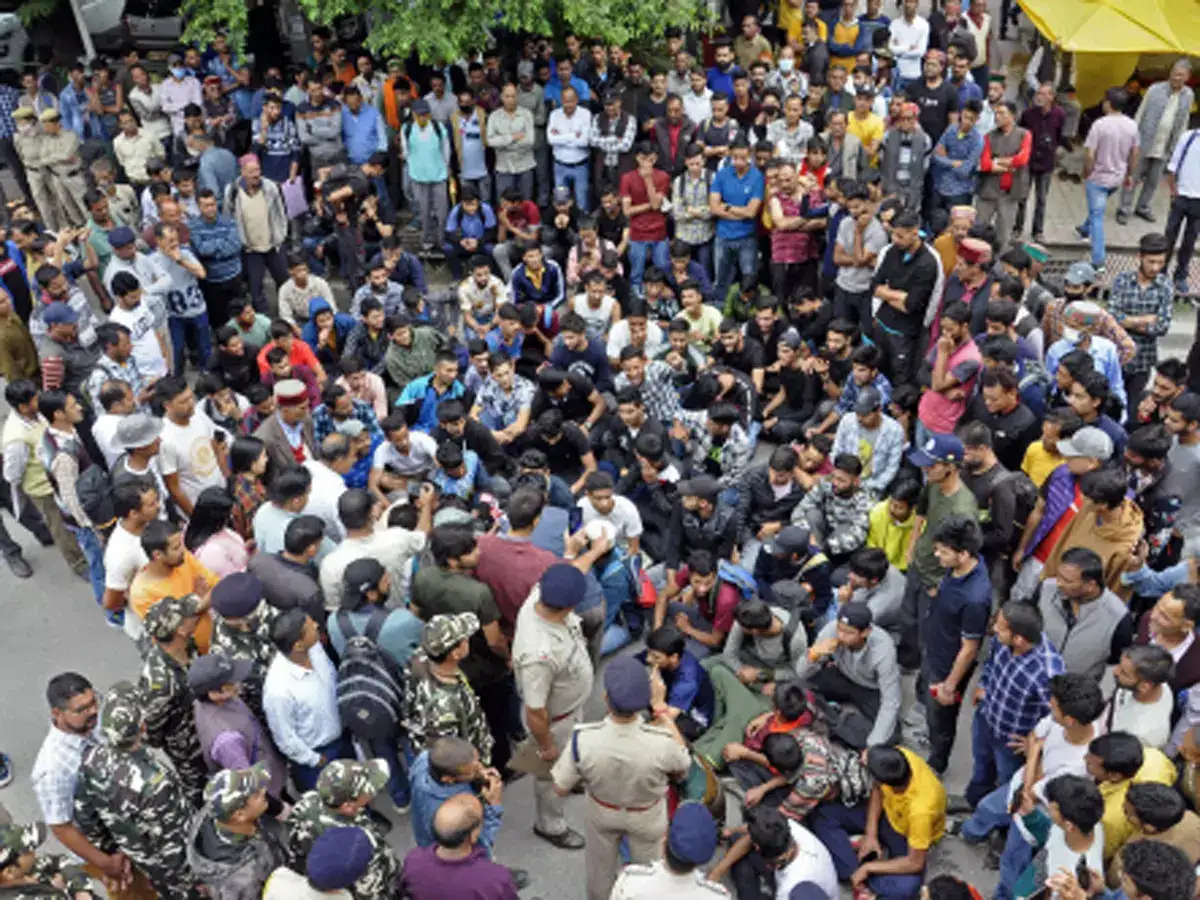
The protests at Jantar Mantar are a prime example of the power of youth, which could not be optimised as the youth lacked the necessary direction
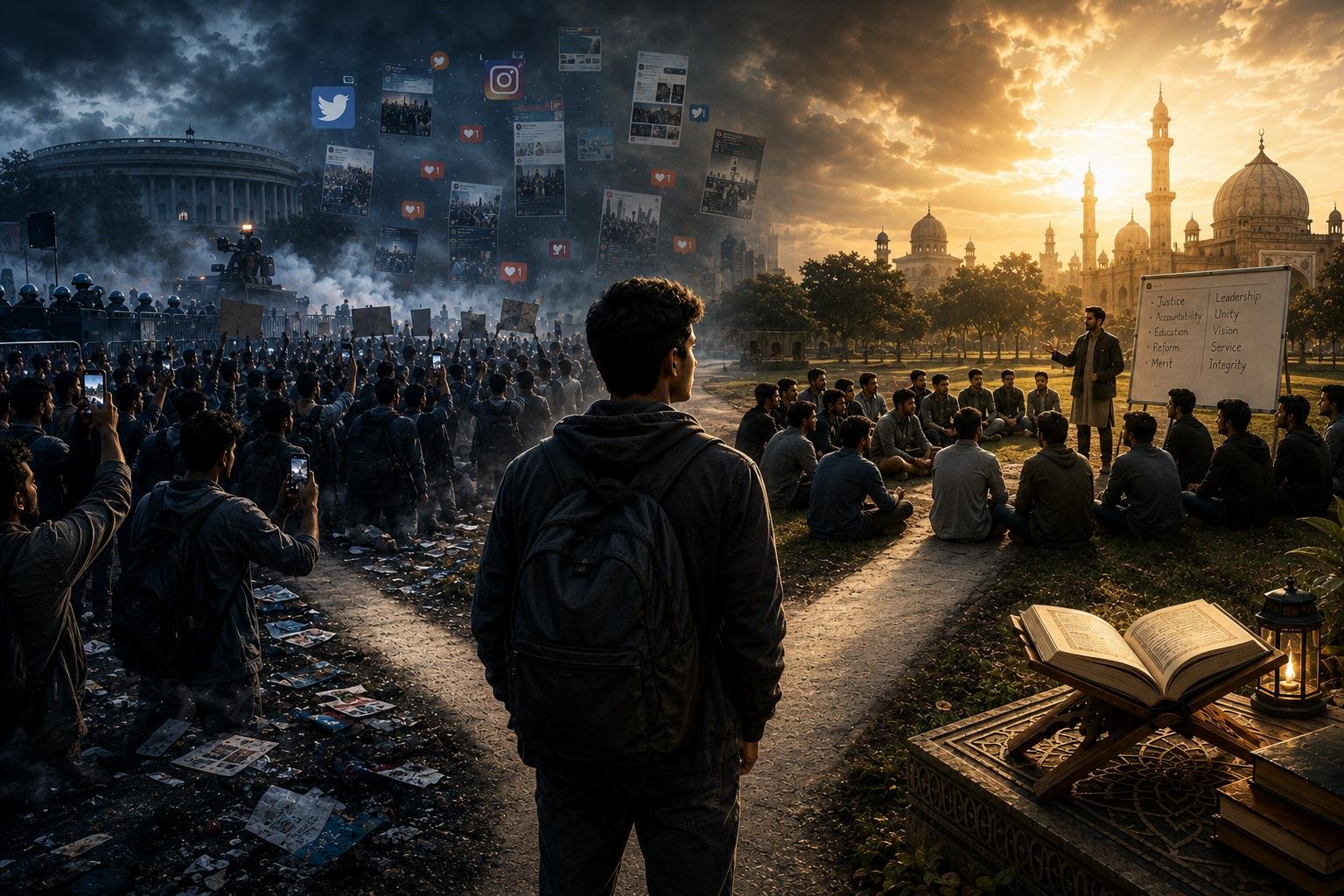
We are not discussing here how Muslims should have responded to the CJP protest. Rather, we need to ponder whether we are free from the same, or even more serious, issues that CJP and similar movements have raised. We are free to draw inspiration from movements and experiences across the world, but we must also understand that, unlike others, we have our own boundaries and identity to uphold while preserving our principles and stature.
If we look back at the 2020 protests, we witnessed the heavy participation of Muslim youngsters who were deeply motivated to oppose the draconian law and gave their utmost efforts towards its repeal. We also witnessed the emergence of Muslim student leaders, many of whom remain incarcerated to this day in connection with the protests. The demonstrations were energetic and widespread, but they did not reach the conclusion the protesters had hoped for. The outcomes fell short of their expectations, while the protests also had serious repercussions that continue to affect us. The Delhi pogrom, the arrest of student leaders, and the suppression of dissent in central universities such as AMU and JMI were among the negative consequences associated with the period of protests, the effects of which are still being felt today.
When we examine the patterns of these protests, one of the core problems that emerges is the lack of effective leadership, which can result in either failed movements or unintended outcomes. The CAA-NRC protests had such severe repercussions that many Muslim youngsters have since been hesitant to participate in similar movements, fearing a repetition of the same consequences. Many of the leaders who stood at the forefront of those protests were subsequently incarcerated.
Similarly, if we look at the CJP protest, although the movement succeeded in achieving its primary demand of the Education Minister’s resignation, it is difficult to identify any broader positive impact from the protest so far. The new Education Minister is the same person who had publicly celebrated the release of the convicts in the Bilkis Bano case. Meanwhile, several of the other demands raised by the protesters remain unfulfilled to date.

Pralhad Joshi, the new esteemed education minister publically supported the Bilkis Bano rape convicts, such was the net output of the ‘revolutionary protests’
This is the natural outcome of demanding something without first considering the validity of the demands, their possible outcomes, and their potential repercussions. When a movement lacks clear direction, responsible leadership, or effective organization, it is bound to produce either negative or negligible results. Can we guarantee now that there will be no more paper leaks? Did the 2020 protests create any positive momentum among Muslim youth? These questions certainly require answers, but they also compel us to understand the necessity of proper leadership.
As Muslims, we should remember that Allah SWT has entrusted us with the responsibility of being His khalifah on earth:
“And [mention, O Muhammad], when your Lord said to the angels, ‘Indeed, I will make upon the earth a successive authority (khalifah).’” (Al Qur’an 2:30)
Allah SWT has made each one of us a potential leader, and in every sphere of our lives, we carry a responsibility to strive for the best possible outcome. We are called either to become leaders ourselves or to identify and support wise leadership that can guide us through our challenges. As leaders, we must constantly seek solutions to the problems before us, respond dynamically to changing circumstances, and align our actions with Islamic principles so that we fulfil our responsibilities and seek the pleasure of Allah SWT. When choosing a leader, we must select the best among us, entrust him with our affairs, and maintain a positive attitude towards his leadership.
However, these qualities cannot be developed overnight. We remain far from fully understanding the need for responsible leadership. Too often, we blindly follow anyone who steps onto a stage and speaks about our problems, without examining his intentions, character, competence, or ability to lead. We place our affairs in his hands without asking whether he is truly capable of carrying that responsibility. As a result, new faces continue to emerge, and we move from one leader to another without addressing the deeper crisis of leadership itself.
To make a meaningful beginning, we need to reconnect with our roots. We need to revisit the lessons of leadership found in the Qur’an and Sunnah and learn from the examples of our righteous predecessors. We need to draw wisdom from our beloved Prophet ﷺ, learn justice from Umar RA, and study the statesmanship of Sultan Abdul Hamid II. We must reconnect with our history while developing a deeper understanding of the principles of sound and successful leadership that remain relevant today. Only then can we chart a path towards better leadership and learn to entrust our collective affairs to those most capable of carrying them. If pursued sincerely and wisely, this approach can not only help address or own challenges but also equip us to contribute meaningfully to the wider problems facing the world today.
