

– Ammar Ahsan (General Secretary, Islamic Youth Federation)
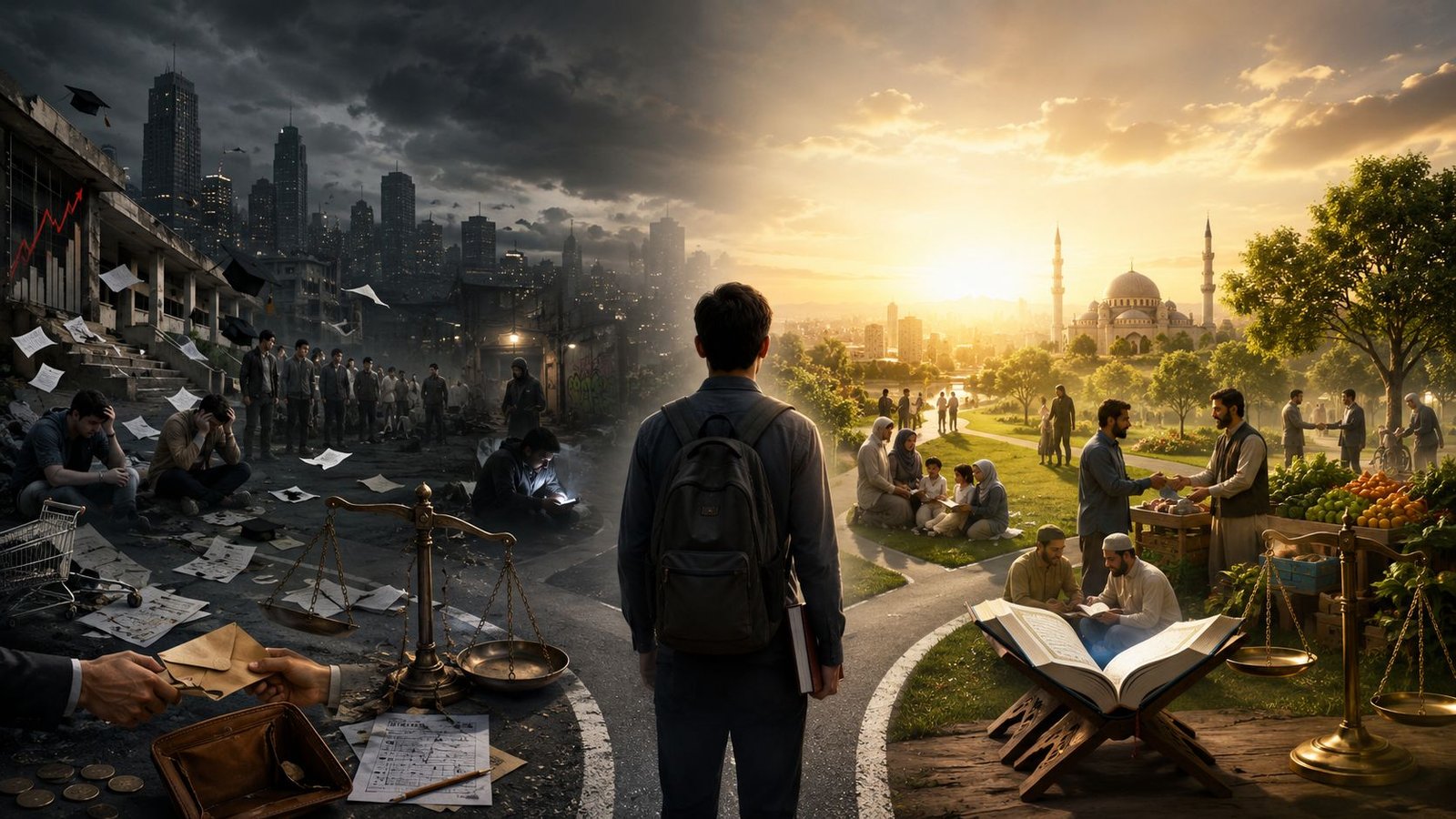
Today, our country is facing political, social, economic, educational, and societal crises. These crises are no longer confined to a single sector; rather, they have engulfed almost every aspect of life. Every segment of society is confronted with one problem or another. Young people, despite completing their education, face uncertainty about their future. Parents are anxious about providing quality education and employment opportunities for their children, while ordinary citizens are suffering from rising inflation, unemployment, corruption, and economic instability, resulting in severe mental stress and anxiety. Overall, an atmosphere of uncertainty, mistrust, and hopelessness is steadily growing in society, which is a dangerous sign for any nation.
The education sector, which forms the foundation of a nation’s progress and prosperity, is currently experiencing a severe crisis. Corruption, examination paper leaks, favoritism, nepotism, and the appointment of incompetent individuals have shaken the very foundations of the educational system. In recent years, the leakage of papers for various competitive examinations has not only wasted students’ hard work but has also severely damaged their dreams for the future. Under such circumstances, hardworking and honest students feel insecure, further weakening public trust in the system. This situation has caused deep frustration among students, leading them to use social media as a platform to voice their concerns and bring their issues to national attention. Their dissatisfaction has also been expressed through protests and public demonstrations in support of their demands and concerns, highlighting the seriousness of the problem.
All these developments indicate that public confidence in the educational system is steadily declining. However, the country’s problems are not limited to education alone; society as a whole is experiencing moral and social decline. Today, lying, fraud, bribery, corruption, hoarding, adulteration, nepotism, and injustice are becoming increasingly common. Unfortunately, the sense of collective responsibility among individuals is weakening, and personal interests are taking precedence over the common good. As a result, national development, social welfare, and collective interests have been pushed aside, while society continues to fragment internally.

Recent paper leaks have created extreme unrest in students resulting in nationwide protests in multiple cities
The family system, which is regarded as the fundamental unit of any society, is also rapidly weakening. The distance between parents and children is increasing, respect for elders is declining, the rights of relatives are being neglected, and relationships with neighbors have become merely formal. These are all signs that our society is facing not only economic and political challenges but also a profound moral crisis.
Similarly, the irresponsible and excessive use of social media and modern communication platforms has played a significant role in social deterioration. A large portion of the younger generation is wasting its energy, time, and abilities on unnecessary entertainment, trivial content, and immoral material instead of engaging in constructive activities. Consequently, society has witnessed a noticeable rise in crime, drug abuse, violence, delinquency, and moral decay. When the moral foundations of a society become weak, even material progress cannot remain sustainable.
The economic situation is equally alarming. Wealth is becoming increasingly concentrated in the hands of a few, while the majority of the population struggles with poverty, inflation, and financial hardship. Employment opportunities are limited, and educated youth wander in search of a better future. The middle class is under severe financial pressure, while the poor struggle even to meet their basic necessities. An interest-based economic system, corruption, unlawful profiteering, and the unjust distribution of resources have further deepened economic inequality.
If these issues are analyzed carefully, it becomes evident that they are not temporary or isolated problems but part of a much broader systemic crisis. Mere policy changes or short-term reforms cannot provide lasting solutions. The real problem lies in the fundamental weaknesses of a system based solely on human thought and experience, which is inherently limited, prone to error, and influenced by personal interests. In contrast, Islam presents a comprehensive way of life based on divine revelation that is fully compatible with human nature.
Islam is not merely a collection of rituals of worship; rather, it provides complete guidance for every sphere of life—including economics, society, politics, and ethics. The Islamic system is founded upon belief in the Oneness of God (Tawhid), belief in Prophethood, and belief in the Hereafter. When a person develops the awareness that they will ultimately be accountable before God, a fundamental transformation occurs in their behavior. They strive to avoid oppression, betrayal, corruption, and injustice because they believe that the true judgment will take place not in this world but in the Hereafter, where neither influence nor deception will avail anyone.
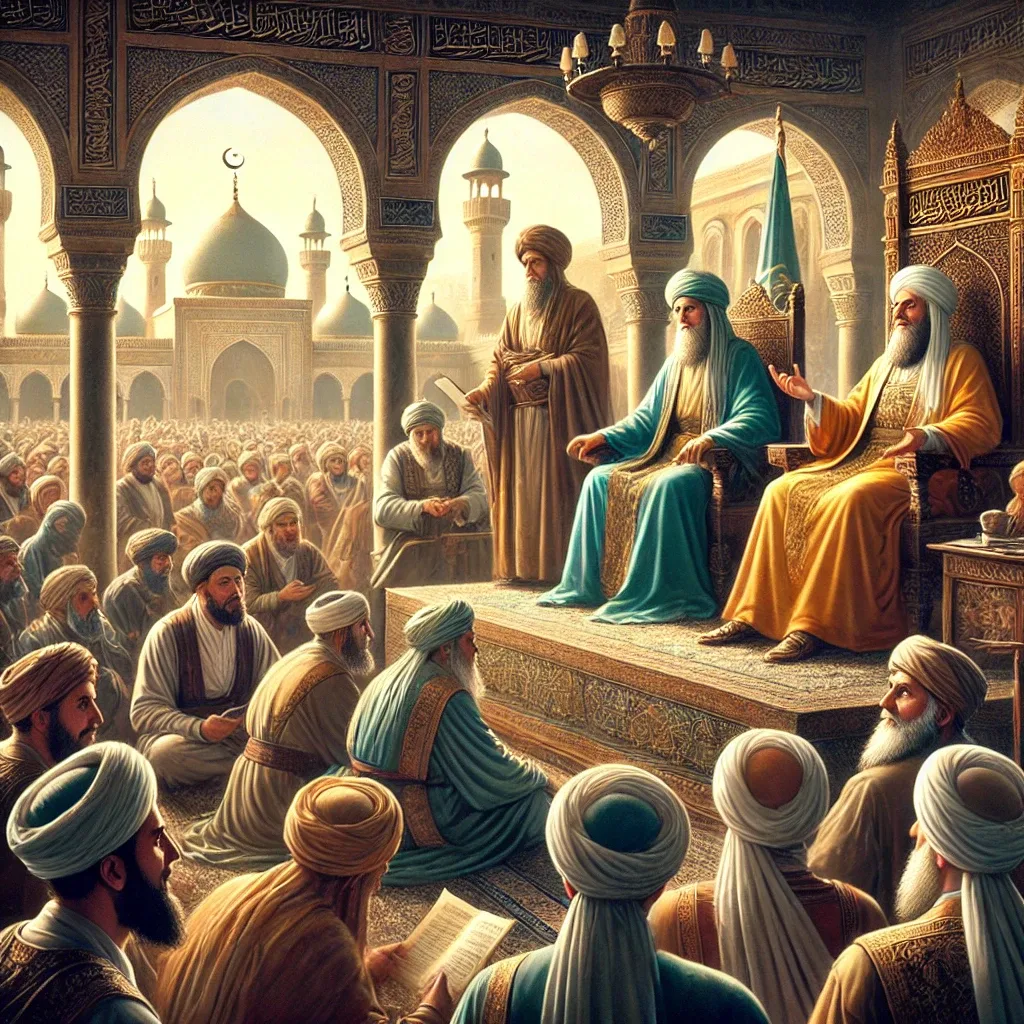
Islam has the answer to all the problems that the society is facing in today’s world, it’s up to us to embrace it
One of the greatest characteristics of the Islamic system of justice is the supremacy of the law and equality before it. In Islam, neither rulers stand above the law nor can powerful individuals usurp the rights of the weak. These principles create trust, justice, and balance within society.
Likewise, the Islamic economic system promotes economic justice and social balance through zakat, charity, lawful earnings, and the prohibition of interest (riba). This system focuses not only on generating wealth but also on its fair distribution and the welfare of society so that no segment of the population remains deprived.
The Islamic social system is based on principles such as brotherhood, compassion, mutual love, maintaining family ties, serving one’s parents, respecting the rights of neighbors, and fulfilling collective responsibilities. These principles help establish a society that is both outwardly strong and internally united and cohesive.
In today’s world, where humanity is facing political, economic, social, and moral crises, the importance of Islamic teachings has become greater than ever. If humanity truly seeks peace, justice, stability, and tranquility, it must return to the principles that connect human beings with their Creator and establish society upon the foundations of justice and fairness. This is the path that can provide a genuine guarantee for a better, more just, and peaceful future.
However, another important reality is that if Islam truly offers the only effective and lasting solution to the political, economic, social, and moral crises of the modern world, then it is the fundamental responsibility of the Muslim community to convey this message to others and firmly establish this understanding in people’s minds. It is not enough merely to believe that Islam offers solutions; rather, this conviction must be communicated to society with wisdom, sound reasoning, and excellence in invitation so that people may recognize both the shortcomings of existing systems and the superiority and effectiveness of the Islamic way of life.
In particular, conscious Muslim students and young people bear a significant responsibility in this regard. History bears witness that major social transformations and extraordinary achievements have always been brought about through the determination, struggle, and sacrifices of the youth. Youth is the stage of life in which individuals possess the energy, intellectual strength, ambition, and passion necessary to bring about change. This is why young people have always played the most effective role in achieving great objectives and carrying out revolutionary movements.
Therefore, conscious Muslim youth should strive to spread the message of Islam, promote intellectual awareness within the Muslim community, introduce people to the truth and comprehensiveness of the Islamic way of life, and actively work for positive change in society. If young people dedicate their abilities and energies to this purpose, they can not only help reform their own societies but also play a significant role in helping humanity overcome its present crises.
