

– Alamgeer Hossain (President, Islamic Youth Federation)
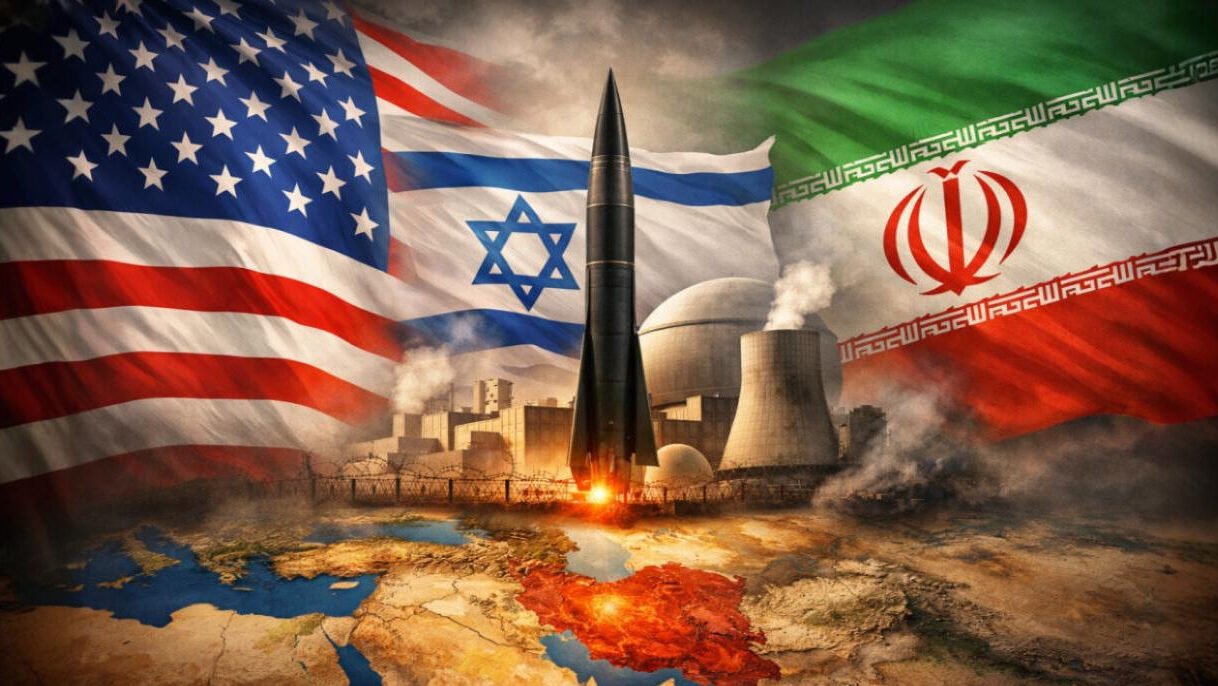
From east to west—the entire world today is swaying in the whirlpool of crises. The war between Iran and Israel–America has currently created an extremely critical situation. Experts are predicting that if the war between Iran and Israel–America continues for a few more weeks, it could push the world towards a major global war. On the one hand, the Iran–Israel war has created a tense atmosphere in different countries around the world, and its impact has also begun to affect the global economy. On the other hand, this conflict has also generated intense emotions among Muslims. Many people are colouring this issue with a Shia–Sunni narrative and, measuring it with their own self-made standards, consider Iran to be a greater enemy than Israel. On the other hand, some believe that only Iran is capable of building resistance against Israel and the United States and confronting them.
The second issue that has had a deep impact on the world for more than the past two years is the Israel–Palestine war. Gaza has been almost levelled to the ground by nearly 200,000 tons of bombs over the past two years, where hundreds of thousands of Muslim women, children, and elderly people have been martyred. Today, that same Gaza survives as a witness to a fragile ceasefire and a faint hope for peace. It is called fragile and a faint hope because even after the ceasefire and peace agreement, attacks on Gaza have continued.
In Southeast Asia, the recent conflict between Afghanistan and Pakistan has created a tense situation in the region. Afghanistan had to fight major world powers—Britain, the Soviet Union, and then U.S.A for more than 20 years. By the blessing of sacred jihad and with the help of Allah, Afghanistan defeated those so-called global powers. Most recently, after defeating the United States, an Islamic Emirate was established there, and the Taliban government is trying to gradually stabilize Afghanistan after decades of war. At this very moment, the war that Pakistan has begun against Afghanistan at the signal of United States has created a tense situation in the region. Moreover, tensions exist in South and Southeast Asia in areas such as India–Pakistan, China–Taiwan, and Cambodia–Thailand, where sparks of conflict ignite from time to time. The relationship between Japan and China, and between the United States and China, has turned Asia into one of the most dangerous potential battlefields in the world.

Due to ongoing global wars, world resembles more of a battleground than a peaceful prosperous environment
There are also other regions in the world whose situations could push the globe toward a new crisis. Among them is Syria, which endured 61 years of Ba’ath Party dictatorship and 14 years of civil war, leaving the country in ruins. Syria is now trying to breathe freely after emerging from that devastation, yet it is not being allowed to live in peace.
Africa, which has endured the bitter taste of colonialism for decades—where its people were enslaved, taken from their lands, and killed—is now trying to rise with dignity. Yet due to the cursed greed for gold and other resources, vile secret plans repeatedly drag them back into that same circle of suffering.
In the Russia–Ukraine war, the exact number of casualties is unknown. However, beyond numbers, the truth is that this war has kept the entire world on edge—from Europe to Africa, from Asia to America.
Latin America today is spending its days in fear and anxiety. Under the shadow of warships approaching its coasts and deadly weapons flying in the skies, its people are searching for their future.
In this ongoing global crisis, all people of the world are affected, but Muslims are suffering the most. In Palestine, Syria, Iran, Iraq, Myanmar, Mali, Sudan, East Turkestan (the Uyghur region), India, the believers are facing extreme oppression and persecution. In this situation, the rulers of the Muslim world are immersed in intense tension and deep incapacity. Even after Israeli aggression against six countries, they remain stagnant. Instead of making their thinking more strategic and modern or searching for new paths to freedom, they are carrying the burden of their failures and choosing the path of subservience.
In this global situation, not only is there little hope from the rulers of the Muslim world, but even among ordinary Muslims little productivity can be observed. If we look around, we will see that a large portion of Muslims are engaged in unproductive activities. Some are completely disconnected from what is happening in the world and are busy only with their jobs, businesses, careers, and daily living. Some people are seen holding “intellectual gatherings” on social media or elsewhere, where discussions and debates take place, but after the conversation ends, they return home and again become occupied with their jobs, businesses, and careers. Some people think everything is finished and nothing can be done, so they sit in confusion and helplessness. Others go a little further and spend their time discussing the arrival and timing of Imam Mahdi (peace be upon him), waiting for that moment. Now the question arises: is discussing these matters, listening to news, gathering information, and talking about the coming of Imam Mahdi and Isa (peace be upon them) not permissible? Yes, these are all permissible, but they are not productive. Merely discussing, gathering information, and waiting for Imam Mahdi (peace be upon him) is not a productive activity. The religion—the way of life—that we have received from Allah, Alhamdulillah, has taught us productivity.
The duty of Muslims is to not get swayed by the happenings around the world, but to fulfill individual and collective obligations of Islam
The importance of every moment in the life of a believer can easily be understood from the following hadith:
The Messenger of Allah ﷺ said:
“If the Day of Judgment comes while one of you has a seedling in his hand, and he can plant it before the Hour begins, then let him plant it.” (Al-Adab Al-Mufrad)
In this hadith, an extraordinary example has been given to teach us productivity. In reality, when the Day of Judgment arrives, planting a tree will not practically achieve anything, because the world itself will no longer remain. What we are actually being taught here is that we should make proper use of every moment of our lives. If encouragement can be given to plant a seedling even in the terrifying moment of the Day of Judgment, then all other worldly fears and tensions are insignificant in comparison. Why then should we remain idle?
Therefore, our duty is not to lose ourselves in the flow of global events. We should observe them when necessary and make du‘a, but at the same time continue striving to improve our faith and deeds and focus on seeking knowledge. Above all, regardless of the situation, as members of the Muslim Ummah we must continue fulfilling the responsibilities and duties given by Allah. On one hand, as the “best nation,” we must carry out the responsibility of calling people toward Allah and engage in enjoining good and forbidding evil. On the other hand, as a ‘upright nation’, we must present the testimony of truth before all humanity and continue striving for the establishment and victory of the Deen. In other words, we must continue worshipping Allah until death.
Allah the Almighty says:
وَاعْبُدْ رَبَّكَ حَتّٰى يَأْتِيَكَ الْيَقِينُ
“And worship your Lord until certainty (death) comes to you.”(Surah Al-Hijr: 99)
May Allah Subhanahu wa Ta‘ala grant us the ability to remain firm upon faith and the Deen and to remain productive during these critical times. Ameen, Ya Rabb al-‘Alamin.
