

– Enamurrahman
The most fundamental flaw in Western ideology is that it has never been practised in the way it is proudly advertised. The gap between Western thought and Western action continues to widen, often producing results that directly contradict the principles it claims to defend. These contradictions are not harmless inconsistencies-they have caused centuries of destruction, destabilised societies, and damaged moral frameworks across the world. This article examines how deeply Western practice deviates from Western ideals, revealing a pattern of selective morality, inconsistent application of human rights, and ideological hypocrisy that undermines its global credibility. Blind imitation of such a system, without questioning its contradictions, leaves individuals and societies vulnerable to social instability, moral confusion, and long-term harm.
1. “Everyone has an Equal Right to Live”: The Historical Reality of Western Expansion
Western nations frequently champion the principle that all humans possess equal rights. Yet their own history reveals one of the most catastrophic violations of this very claim.
The forced removal of Indigenous nations across North America in the 18th and 19th centuries-affecting the Cherokee, Muscogee (Creek), Choctaw, Chickasaw, Seminole, Navajo, Apache, and many others-stands as a stark example. These communities, with established agricultural economies and deep cultural ties to their land, were violently uprooted under U.S. expansionist policy. They were marched hundreds of miles through freezing weather, starvation, disease, and brutal terrain. An estimated 4,000 of 16,000 Cherokee died; the Choctaw march was described by observers as “a trail of tears and death.” The 1864 Long Walk of the Navajo resulted in mass suffering and mortality due to contaminated water, crop failure, and inadequate supplies.
Modern historians and international institutions now acknowledge these removals as acts of ethnic cleansing and, in several instances, genocide. This exposes the earliest and clearest contradiction within Western ideology: the assertion of universal rights alongside the systematic destruction of entire civilisations.

Genocide of Native Americans in the United States is a prime example of western hypocrisy on the principle of “Right to Live”
2. Military Interventions: Violating Human Rights in the Name of Protecting Them
The contradiction did not end with early expansion. Throughout the 20th and 21st centuries, Western military interventions consistently violated the very principles – sovereignty, human rights, and the rule of law, that the West claims to uphold.
The atomic bombings of Hiroshima and Nagasaki killed approximately 200,000 civilians. The Vietnam War resulted in over 2 million civilian deaths. Secret bombing campaigns in Cambodia and Laos dropped more than 7 million tons of explosives, killing hundreds of thousands and displacing millions. The 2003 Iraq invasion caused between 200,000 and 500,000 civilian deaths and triggered long-term instability displacing over 4 million people.
Many of these actions lacked UN authorisation and clearly violated international law. Examples include the invasions of Grenada (1983) and Panama (1989), the legally unapproved Iraq War, and NATO’s unauthorised transformation of a humanitarian mandate in Libya (2011) into full-scale regime change.
Thus, Western claims of defending freedom and human rights collapse when placed against the scale of destruction caused by their own interventions.
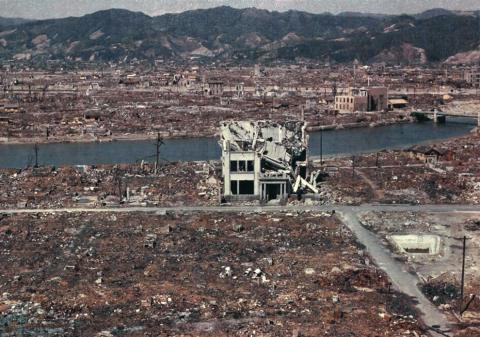
The atomic bombings of Hiroshima & Nagasaki remain the biggest massacre in human history
3. The Myth of Women’s Freedom: When Autonomy is Allowed Only it it Fits Western Norms
Western ideology often promotes itself as the champion of women’s freedom, particularly in matters of dress and bodily autonomy. However, this freedom is selectively applied.
Women who choose modest dress, especially the hijab, niqab, or burqa, face legal penalties across many Western nations. Denmark criminalised full-face veils in 2018 and expanded restrictions by 2025. Switzerland and Belgium enforce national bans, upheld by European courts. Austria and Bulgaria impose fines for face coverings, with penalties reaching up to €770.
The contradiction is glaring: if freedom means a woman can dress as she chooses, then restricting modest dress directly violates that principle. These laws reveal that Western “freedom” is conditional accepted only when it aligns with Western cultural expectations.

A sorry state of affairs for the so-called pioneers of women’s freedom
4. The Politics of Freedom: When Ideals Change According to Interest
Western nations display a selective approach to freedom and human rights, applying them strictly to rivals while overlooking or excusing violations by allies. Countries that choose traditional values, nationalise resources, or reject Western cultural priorities are labelled “authoritarian,” yet similar actions by Western partners are tolerated or encouraged.
The inconsistency is visible across sectors:
Human rights: Harsh criticism for China or Russia, but silence on Israel’s actions in Gaza.
Free speech: Offensive caricatures of the Prophet Muhammad PBUH are defended as “expression,” but criticism of Zionism or Holocaust denial is criminalised.
Economic freedom: Advocating free markets while imposing sanctions on countries like Iran, Cuba, and Venezuela, often restricting – food and medicine.
Global development: IMF and World Bank structural adjustment programs push indebted nations into deeper dependency while enabling Western corporate interests. Here, “freedom” functions not as a universal principle but as a geopolitical tool. The ideal shifts according to Western interests.
Conclusion
Across history and into the modern era, Western ideology reveals a consistent pattern: its ideals are universal only in theory, not in practice. Whether in human rights, women’s autonomy, freedom of expression, or global politics, Western actions frequently contradict the values it claims to champion.
