

– Alamgir Hossain
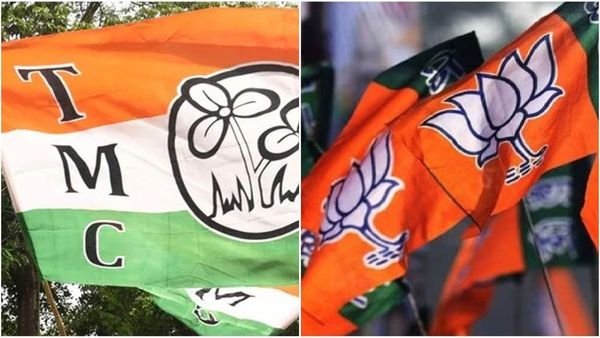
Recently, among the assembly elections held in several Indian states, the West Bengal assembly election became the center of attention. The Bharatiya Janata Party (BJP) secured a clear majority and formed the government in the state. Several factors contributed to the BJP’s success in West Bengal.
The first reason is that through the SIR process, approximately 9.1 million voters were removed from the voter list, the majority of whom were believed to be Trinamool Congress (TMC) supporters. The second major reason was the BJP’s full deployment of its organizational and political strength in West Bengal. From the Prime Minister and Home Minister to chief ministers of BJP-ruled states, all participated in the election campaign. Uniting Hindus by promoting hostility toward Islam and Muslims became the central campaign agenda. Muslims were portrayed as “infiltrators” and “extremists”; claims were made that Hindus had not progressed and were under threat. Promises were made to implement the NRC, use bulldozer actions, and slogans such as “Those who are with us, we are with them” became prominent parts of the campaign. In short, Muslims were presented to ordinary Hindus as their greatest enemy.
The third major reason for the BJP’s success was that during the past fifteen years, the TMC government allegedly provided an environment in which the RSS could work extensively at the grassroots level, helping expand the BJP’s vote bank. During TMC rule, thousands of RSS-affiliated schools were established, and temples were built in villages using government funds. This strengthened the RSS and BJP at the grassroots level. Over these fifteen years, TMC’s policies and actions enabled the BJP to emerge as the state’s principal opposition force.
TMC’s calculation was that by highlighting the BJP’s anti-Muslim agenda, Muslims would consolidate behind TMC, allowing it to maintain power through overwhelming Muslim support combined with a portion of Hindu votes. This strategy was clearly reflected during the election campaign.
Throughout the campaign, TMC focused heavily on issues affecting Muslim lives and property. For example, it strongly promoted the message that if the BJP came to power, it would implement an NRC similar to Assam’s, and that TMC would prevent this from happening.
However, this policy of “raising a snake by feeding it milk” and pursuing a double standard ultimately proved costly for TMC. Muslims increasingly viewed TMC’s policies as contradictory. Government-funded temple construction, opportunities provided to the RSS, the suppression of protests against the Waqf law by linking them to communal unrest, and the crushing of grassroots movements opposing voter-list deletions all contributed to Muslim dissatisfaction with TMC. According to the text, the consequences of this dissatisfaction are now visible.
The BJP’s overwhelming victory in West Bengal is expected to significantly affect the daily lives of Muslims there. The conditions in other BJP-ruled states provide some indication of what may follow. Understanding the BJP’s ideological foundations, makes the situation clearer. The BJP is the foremost political advocate of an extremist Hindutva ideology and seeks to maintain political power by promoting anti-Muslim narratives and Hindutva nationalism.
9.1 million voters were deleted in Bengal after SIR, with the majority of the affected being Muslims
Several ideas have been systematically instilled in sections of Hindu society over decades:
- Muslims are the eternal enemies of Hindus.
- Only Hindus are the original owners of the land; others are merely settlers.
- Expelling Muslims is a religious duty.
- The BJP is the only force capable of fulfilling this “great responsibility.”
As a result, Muslims across India face severe challenges, including mob violence in the name of cow protection, threats to citizenship through the CAA and NRC, restrictions on hijab, and “bulldozer politics.” These are not isolated incidents but are parts of a broader ideological project associated with the RSS, Bajrang Dal, and BJP.
Compared to other regions, the intensity of Hindutva influence in West Bengal had previously been relatively limited. However, after this electoral victory, it is expected to increase substantially. The victory is not merely a political success but, in the view of some observers, as symbolizing the collapse of what they considered one of the last strongholds of religious and cultural freedom for Indian Muslims. Consequently, concerns are expressed about a potential rise in persecution and discrimination.
West Bengal shares a border of approximately 2,200 kilometers with Bangladesh. The BJP government may use the issue of “infiltration” or illegal Bangladeshi immigration as a major political tool, making it easier to label individuals as Bangladeshis, particularly after large numbers of Muslim names were reportedly removed from voter rolls. The possibility of implementing an NRC similar to Assam’s is very much possible. Hence, the difficulties experienced by Muslims in other BJP-ruled states could become even more severe in West Bengal.
In West Bengal, as well as throughout India, Muslims are facing various trials and hardships. In such circumstances, remaining steadfast in faith and religion is the foremost responsibility. There are countless examples before us of people who remained firm in their faith despite enduring thousands of acts of oppression and persecution.
Prophet Ibrahim (Abraham), peace be upon him, was thrown into a blazing fire, yet he did not waver in the slightest. Rather, with complete steadfastness, he declared:
“Hasbiyallahu wa ni‘mal wakeel”
“Allah is sufficient for me, and He is the best disposer of affairs.”
The magicians who embraced faith after witnessing the miracles of Prophet Musa (Moses), peace be upon him, were threatened by Pharaoh, who told them that if they did not renounce their faith, their hands and feet would be cut off from opposite sides and they would be crucified. Even then, they did not turn away from their faith.
The story of the People of the Ditch (Ashab al-Ukhdud) is also before us. Those who embraced faith after witnessing the brilliant sacrifice of a young man were thrown into pits filled with fire, yet they were not willing to move even an inch away from their faith. They accepted jumping into the fire but were not prepared to abandon their belief.
21 states are now being ruled by the BJP & it’s alliances, but this should not deter Muslims from their actual responsibility of representing the religion in its truest form
The second point is that reliance upon Allah is the true strength and key to success for a believer. Trust should not be placed in any political leader, party, or worldly power, but only in Allah Almighty.
The third point to remember is that the rise and fall of nations changes with time. Power and authority do not remain with any one group forever. Circumstances, trials, and dominance continue to change over time.
The fourth point is that we know there are differences in the policies and methods of various Muslim organizations, and there are also differences among various schools of thought regarding secondary issues. However, these differences are not the main problem. Setting aside all such divisions and disagreements, Muslim organizations and people of different schools of thought must come forward and work together on a Minimum Common Agenda.
Above all, it is essential to examine realities on the ground deeply while keeping the spirit of religion in mind. We must avoid proposing solutions based solely on emotional reactions to the suffering of Muslims—solutions whose consequences Muslims have continued to bear for the last eighty years. Trusting secular parties is, in reality, akin to placing a cat in charge of guarding fish.
In the social and economic spheres as well, discriminatory treatment was meted out to Muslims. Despite all these facts, placing trust in the same forces again is like being bitten repeatedly from the same hole, whereas the saying goes: “A believer is not bitten from the same hole twice.”
At the same time, we must accept the reality that not only in India but anywhere in the world, the true restoration of Muslim honor and dignity cannot be achieved through the democratic process alone. This can only be achieved through the correct and complete implementation of Islam. Therefore, Umar ibn al-Khattab (may Allah be pleased with him) said:
“We were a humiliated people, and Allah granted us honor through Islam. If we seek honor through anything other than Islam, Allah will humiliate us again.”
Therefore, the Muslims of India today must enter fully into the religion.
“O you who believe! Enter into Islam completely and do not follow the footsteps of Satan. Indeed, he is your clear enemy.” (Surah Al-Baqarah, 2:208)
Understanding the religion completely, acting upon it, conveying its message, and striving for its establishment—all of these are among the responsibilities of Muslims.
O Allah! In this time of trial, grant us the ability to remain steadfast upon the religion and to understand matters correctly. Ameen, O Lord of the Worlds.
