

– Dr. Mohammed Mubashshir
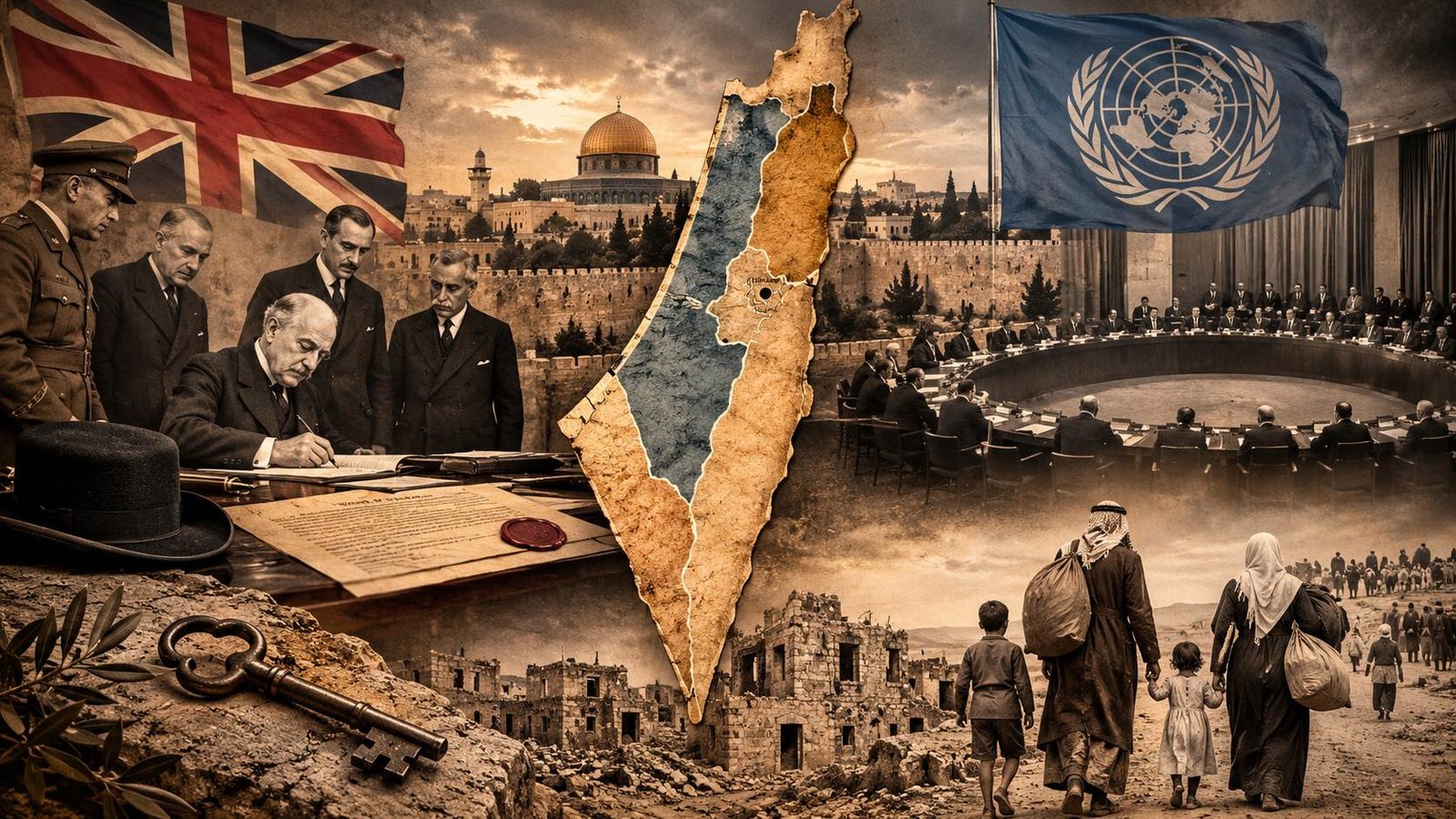
The First World War had both immediate and long-term effects on the entire world, especially the Middle East. The Ottoman Empire collapsed, losing nearly 5 million of its 21 million people. Palestine too suffered; despite an influx of Armenian refugees, its population declined. Yet amid this devastation, Zionism found its greatest opportunity. The global conflict became the movement’s golden hour.
During the war, Britain struck secret deals with its allies. Two became infamous – one with Sharif Hussein of Mecca, the other with the Zionist Federation. In 1915, Britain promised Hussein gold, weapons, and the creation of an independent Arab state in return for leading a revolt against the Ottomans.
The second promise to the Zionist Federation-was fulfilled through the infamous Balfour Declaration, in which Britain pledged to establish a Jewish state in Palestine after the war.
After capturing Jerusalem in 1917, Britain worked with Zionist leaders to lay the groundwork for a Jewish state. Following the war, the 1919 Paris Peace Conference created the League of Nations, which, at San Remo in 1920, granted Britain control over Palestine, disregarding the will of its people.
The Balfour Declaration initially lacked legal status, but Zionists celebrated when it was embedded in the preamble of the British Mandate. Under this Mandate, Britain enacted population and land laws favouring Zionist goals-encouraging Jewish immigration, easing visa issuance, and enabling land transfer to Jews. The Mandate thus secured the two pillars of a Jewish homeland: population and property.
The British Mandate swelled the Jewish population, sparking clashes with Arabs. In response, Britain issued the 1939 White Paper, which the Zionists violently opposed. To resolve the unrest, Britain invited Arab states, the Arab Higher Committee, and the Jewish Agency to a conference. The Arabs refused to attend because the Grand Mufti was excluded, while the Jewish Agency boycotted after its leaders were arrested for the King David Hotel attack. With both sides absent, the conference collapsed. Britain then proposed extending the Mandate for five years, creating a united Palestine, and admitting 100,000 Jews under Arab approval. When this plan too failed, Britain referred the issue to the United Nations.
UNITED NATIONS SPECIAL COMMITTEE ON PALESTINE (UNSCOP)
On April 2, 1947, Britain asked the UN Secretary-General to include the Palestine issue on the next General Assembly agenda and to hold a special session to form a preparatory committee for the discussion. On April 21-22, 1947, Egypt, Iraq, Syria, Lebanon, and Saudi Arabia urged the UN to add the termination of the Mandate and Palestine’s independence to the session agenda, but the General Assembly rejected their proposal on May 1.
On May 15, 1947, the General Assembly voted to form a special committee to examine the Palestine question. Representatives from 11 nations-Australia, Canada, Czechoslovakia, Guatemala, India, Iran, the Netherlands, Peru, Sweden, Uruguay, and Yugoslavia-were appointed. Palestinian Arabs opposed the move, citing fatigue with prior commissions, and Arab states-backed by Afghanistan and Turkey-voted against it.
UNSCOP held sessions in New York, Palestine, Beirut, and Geneva, meeting various individuals and groups and visiting Jewish refugee camps in Europe. Zionist representatives emphasized Jewish religious, historical, and legal claims to Palestine. The Arab Higher Committee, however, boycotted the inquiry, protesting the UN’s refusal to include the Mandate’s termination and Palestine’s independence on the agenda. They argued that Arab rights were already self-evident and required no further investigation.
On August 31, 1947, UNSCOP submitted its report with twelve recommendations to the General Assembly, eleven of which were adopted unanimously. The recommendations called for ending the Mandate, granting Palestine independence, and protecting holy sites. The committee also noted that resolving the Palestine question and the Jewish refugee problem were separate issues, with the refugee crisis requiring international intervention.
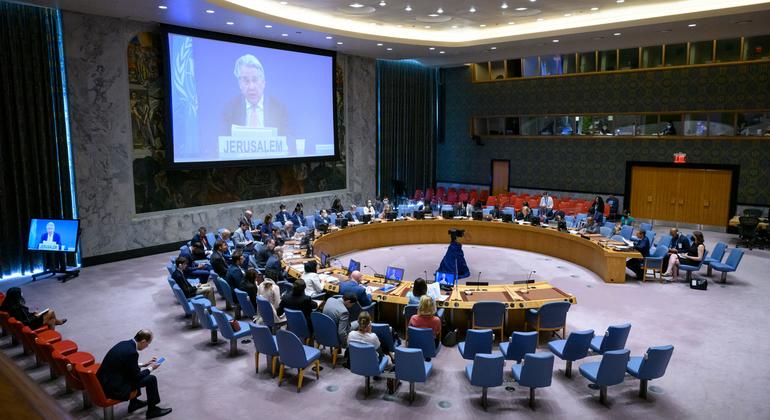
The United Nations has largely remained a bystander as Israel has increased its oppression on the Palestinian people in the past century or so
UNSCOP PROPOSED TWO SOLUTIONS FOR PALESTINE
1. Majority Plan (Partition with Economic Union): This divided Palestine into a Jewish state, an Arab state, and an internationally controlled Jerusalem. It allocated 56.4% of the land to Jews (who were only 33% of the population), 45% to Arabs, and 1% for Jerusalem. Arabs, owning 93.5% of the land and forming 68.3% of the population, were clearly disadvantaged. Before the plan, Jews held less than 5.67% of the land.
2. Minority Plan (Federal State): Proposed by India, Iran, and Yugoslavia, it envisioned a federal state of Arab and Jewish regions with Jerusalem as the capital. The federal government would oversee defence, foreign affairs, immigration, currency, transport, and communication, while both states retained local autonomy, minority rights, and guaranteed access to holy sites.
MIXED REACTIONS
When UNSCOP’s report came out in September 1947, Arabs and Zionists responded sharply. Arabs condemned both plans, especially the Majority Plan, which gave 50% of the land to a Jewish minority, and also rejected the Federal Plan for risking division. They protested and warned of violence if implemented.
AD HOC COMMITTEE AND THE PARTITION PLAN
In September 1947, the General Assembly formed an Ad Hoc Committee to handle Palestine proposals. The Arab Higher Committee refused to present views, citing 25 years of experience with 18 previous commissions. On November 26, the Assembly began deliberations and gradually moved toward approving the Majority Plan (Partition with Economic Union).
The Partition Plan divided Palestine into six areas-three each for Jewish and Arab states, with Jaffa as an enclave. Jerusalem and its surroundings were placed under UN control. Provisions included: no Arab-owned land in the Jewish state could be confiscated for non-public purposes; the Mandate would end by August 1, 1948, with new states formed within two months; and an economic union with minority protections. Zionists accepted the plan, celebrating across Tel Aviv and Jerusalem as it legitimized their claim. Arabs rejected it, calling it a blatant violation of the UN Charter and a denial of self-determination, since Jews owning less than 10% of the land would rule the proposed state.
A JEWISH STATE IS BORN
Following Resolution 181, a Palestine Commission was set up to implement the plan and act as a transitional authority. Britain was to transfer powers to the commission, which would then hand over authority to Arab and Jewish leaders. However, Zionists declared Israel on May 14, 1948, instead of waiting. Although the Partition Plan set August 1, 1948 as the Mandate’s end, they acted early. As David Gerald Fincham noted in “Understanding the Partition”: “There was no need for Israel to declare independence from Britain on May 14, 1948, since the Mandate had already ended. Instead, it simply declared the establishment of a state.”
After Israel’s declaration, Zionists ignored UN resolutions. Instead of 56%, they seized over 77% of the land, took most of Jerusalem, and declared it their capital. Nearly one million Palestinians were forcibly displaced. To pursue “Greater Israel” from the Nile to the Euphrates, ethnic cleansing of Palestinians was deemed essential. Since then, Israel has continued campaigns of war, land occupation, and displacement.
THE ROLE OF INTERNATIONAL INSTITUTIONS
Since the partition and Israel’s creation, international institutions have remained passive. Genocide has continued in Palestine, while they mostly passed resolutions. Whenever action was attempted, the United States, a global power, used its veto to shield Israel.
To this day, the same story continues to repeat itself.
