

– Alamgir Hossain
Those who associate partners with Allah (SWT) or deny Him often form alliances to oppose truth and justice and to act against the believers. Despite their differences in appearance, ideology and political interests, they share a common foundation: disregard for Allah’s sovereignty and the pursuit of power according to their own desires. They seek both to free themselves from divine authority and to impose their own authority over others. We find them acting as members of the same group in many different eras, even though there may be disagreements, rivalries, conflicts and clashes of interests among them.
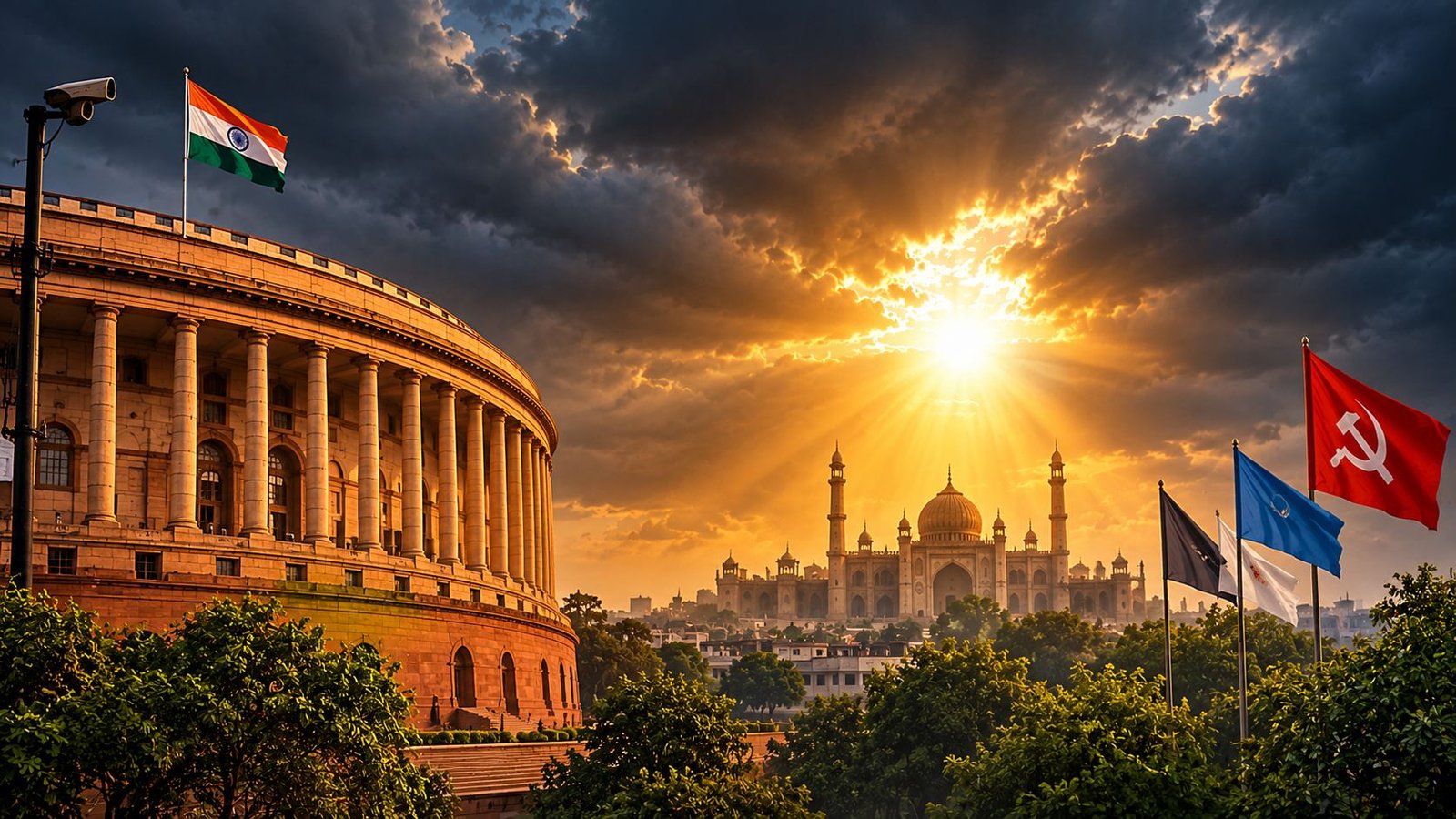
If we look at India today, we can see, on the one hand, Hindutva groups and, on the other, secular, communist and liberal groups. From an ordinary point of view, these two camps appear to be rivals of one another. One camp is making full use of the media, manpower, administration and judiciary to retain its hold on power, while the other is desperately trying to come to power by constructing a narrative around the corruption of the present government. If Muslims, upon witnessing the Islamophobia and anti-Muslim hostility of extremist Hindutva groups, regard only them as their enemies and begin to consider secular, liberal and communist groups their closest friends simply because they oppose the BJP, then it must be understood that these Muslims are either unaware of the fundamental teachings of Islam or are being swept along by a tide of emotion, drifting wherever the current takes them. When the Messenger of Allah (peace and blessings be upon him) said, “Al-kufru millatun wahidah”—meaning, “All forces of disbelief constitute one community”—considering such groups one’s closest friends is nothing but ignorance or indifference.
One thing must be remembered: for the sake of their mutual interests, these groups will engage in rhetoric against one another, organise movements, stage protests and hold rallies. However, when the conflict is directed against the Deen of Allah and His beloved servants, they come together to assist, support and cooperate with one another. If we examine the history of the past several centuries, we will see that despite their disagreements on numerous issues, Jews, Christians, polytheists and communists have often united and worked collectively as a vast coalition against Islam and Islamic movements and organisations in different parts of the world. This coalition is undoubtedly formidable. They possess not only centuries of accumulated experience in fighting Islam but also all the necessary material, cultural and intellectual resources, along with the means to carry out satanic conspiracies, achieve their malicious objectives and bring entire regions under their domination. Even if we examine these groups individually, we will find that secularists, communists and liberals today occasionally make a few favourable remarks in support of Muslims in India. Yet, even today, in places where communists hold power, Muslims continue to face oppression and persecution. The ongoing persecution of Muslims in East Turkistan, or China’s Xinjiang region, is a living example of this. There, mosques have been turned into dance halls and bars or horse stables. Restrictions have been imposed on fasting during Ramadan, reading the Qur’an, growing beards and practising other aspects of Islam.
The recent protests have shown the irregularities of the present government, but Muslims need to be aware of dangers posed by the agitators as well
Therefore, at a time when Muslims in India are the primary targets of Hindutva groups, the amount of effort and time Muslims would expend by joining hands with communists and secularists to oppose one or two misdeeds of Hindutva groups would yield very little in return. Indeed, it would hardly be an exaggeration to describe the gains as virtually zero. The reason is that even if secular and communist groups succeed in bringing about a major change by constructing a powerful political narrative and subsequently come to power, the cycle of oppression against Muslims will nevertheless continue. Only the nature and form of that oppression may change to some extent.
All those who seek to establish their own authority and sovereignty in this world in place of Allah keep people shackled in servitude to themselves and exploit them under the guise of governance. As long as such anti-divine forces remain out of power, they may appear harmless and virtuous. But as soon as they assume power, they reveal their true colours and begin to exploit people, binding them in chains of servitude and crushing them under the burden of oppression. The fundamental point is this: those whose foundations are built upon shirk (associating partners with Allah) will inevitably commit oppression when they come to power. The greatest injustice is to associate partners with Allah. It is only natural that those who are involved in this greatest form of injustice will perpetrate countless other forms of oppression as well. Whether we speak of Hindutva groups or secular, communist and liberal groups, the greatest injustice committed by both camps is that they consider themselves, rather than Allah, to be the lawgivers and the possessors of sovereignty, and they remain preoccupied with turning human beings into their own slaves.
In present-day India, Hindutva groups have succeeded in creating a narrative that Islam and Muslims are the principal obstacles to the establishment of the so-called ‘Hindu Rashtra’ which has effectively existed in an undeclared form since independence. According to this narrative, Muslims are the eternal enemies of Hindus, Hindus are the true owners of this land while everyone else is a settler, expelling Muslims is a religious duty of Hindus, and the Hindutva-driven BJP government is the only force that can be relied upon to fulfil this supposedly noble mission. As a result of this narrative, Hindus are hoping that India will eventually become a Hindu Rashtra and that the so-called ‘problems’ they face will disappear. The reality, however, is that if the imaginary Muslim-free Hindu Rashtra envisioned by these Brahmanical-minded Hindutva forces were ever established, or if India were declared a Hindu Rashtra and Muslims were reduced to an extremely vulnerable position and forced to live as second-class citizens, ordinary Hindus would also become victims of the same oppression and persecution that Muslims are facing today. This is because Hindutva forces driven by Brahmanical ideology would then become virtually unstoppable, turning people into slaves and crushing them under the wheels of exploitation. That is not to say that ordinary Hindus are currently in a particularly favourable position. They, too, are suffering from rising prices, corruption and exploitation by the elite. However, through flashy promises of job creation, appeals to Hindu religious sentiments and an anti-Muslim agenda, Hindutva forces have constructed a narrative that has deeply influenced ordinary Hindus.
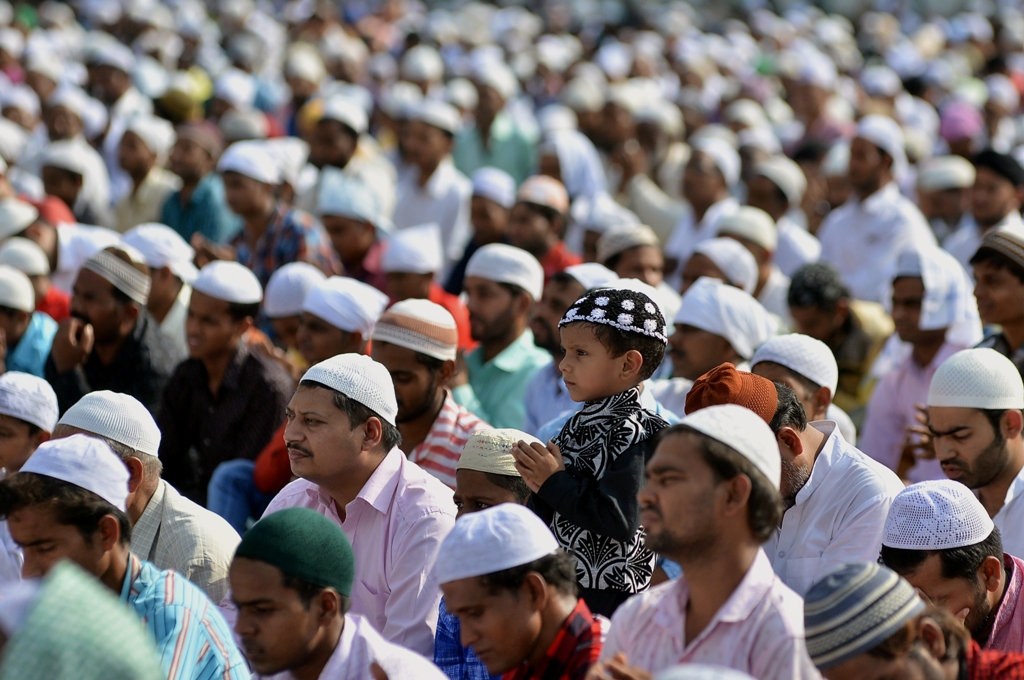
The Muslims need to embrace Islam instead of relying on other worldly crutches if they really want to change their predicament in India
Compared with the success Hindutva forces have achieved in shaping public opinion among Hindus, both through the media and through grassroots-level mobilisation, secular and communist groups have failed to establish a similarly effective narrative among ordinary Hindus. Although the NEET paper leak scandal has enabled them to influence some highly educated Hindus and members of Gen Z, they have recently managed to bring together college and university students and educated young people into an anti-BJP bloc. As a result, protest movements have emerged in major cities.
Whatever the outcome of these movements, they are not necessarily beneficial or advantageous to Islam and Muslims, as I have discussed previously. Nevertheless, these protests are helping to clarify certain issues for the general public. First, when this government was persecuting and oppressing Islam and Muslims, and when it used the state machinery to carry out a lathi charge against students at Jamia, these communist and secular groups did not fully recognise the authoritarian nature of the government. However, when protesters began to be detained, when people were reportedly arrested from aircraft even before they could participate in marches, and when attempts were made to silence lawyers, social activists and journalists, people began to realise what was happening. Second, one of the defining characteristics of an authoritarian and oppressive ruler is the tendency to bring the judiciary under their control, leaving people with no real prospect of obtaining justice through it. Now that this group is witnessing a judiciary that appears to be under the government’s influence, with justice increasingly elusive, it is beginning to understand that the government has become authoritarian. Justice means delivering a verdict honestly and fairly on the basis of facts and evidence. But when evidence is disregarded and judgments are delivered solely on the basis of faith or belief, such decisions cannot be regarded as justice. This is precisely what has happened to Muslims. Today, even a lawyer like Kapil Sibal has to say, “I no longer have much faith in the Supreme Court of India.” Given the way courts have rejected arguments based on reason and evidence, and the remarks made by chief justices, it is understandable that secular and communist groups are beginning to realise that justice cannot be expected from this judicial system.
Certain incidents that occurred before and after the recently emerging Gen Z movement are particularly significant for Indian Muslims. First, there have been instances in which the government or the administration has used mosques to make announcements, or compelled mosque imams to announce that Muslims should not participate in the marches organised by CJP. Second, there have been instances of intelligence agencies profiling members of Islamic organisations and elected representatives. Third, when Muslims participate in protest marches, FIRs are selectively registered against them, and they are arrested. These developments give the impression that the Hindutva government does not consider the secular-communist alliance to be as serious a threat to its position. Rather, it appears that the government is more concerned about the possibility of Muslims participating in these protests and marches in overwhelming numbers. The prospect of such large-scale Muslim participation seems to be causing greater anxiety among Hindutva forces. Although Muslims are beset by internal disunity, a lack of leadership and an increasing distance from the fundamental teachings of their faith, Hindutva forces appear particularly concerned about the possibility that Muslims might rediscover the spirit of their religion, produce capable leadership or achieve unity. If that happens, Muslims in India could emerge as a major force. In that event, Hindutva hegemony and dominance would come under threat, potentially bringing an end to the chaos, oppression, persecution, corruption and exploitation perpetuated by these forces. This is not merely an emotionally driven prediction about the future. History bears witness to the fact that the advent of Islam in the Indian subcontinent and the establishment of Muslim rule challenged and undermined the politics of exploitation practised by Brahmanical forces. This is how falsehood is ultimately vanquished when the truth arrives. Allah the Almighty says in the Holy Qur’an:
وَ قُلۡ جَآءَ الۡحَقُّ وَ زَهَقَ الۡبَاطِلُ ؕ اِنَّ الۡبَاطِلَ كَانَ زَهُوۡقًا ﴿۸۱﴾
“And say, ‘Truth has come, and falsehood has vanished. Indeed, falsehood is bound to vanish.” (Surah Al-Isra, 17:81)
