

– Haider Hussaini
In today’s hyper-connected world, mobile phones have evolved from simple communication tools into constant companions. For many, especially young people, smartphones are no longer just devices. They have become sources of entertainment, validation, distraction, and sometimes even emotional escape. A moment of boredom now feels unbearable without a screen. Silence feels heavy. Waiting feels wasted.
Excessive mobile phone use has been linked to serious mental and emotional consequences. Research across multiple countries has associated heavy smartphone usage with:
- Poor sleep quality
- Increased anxiety and depressive
- symptoms
- Reduced academic performance
- Shortened attention span
- Social isolation
- Emotional instability
A study conducted among university students found that those using smartphones for more than four hours daily reported significantly higher levels of anxiety, depression, and sleep disturbance.
Constant notifications and short-form content train the brain to crave rapid, shallow rewards. The mind becomes conditioned to seek stimulation every few seconds. Deep reading, focused study, meaningful reflection, and even attentive prayer begin to feel “difficult.”
Free time, in the digital era, is often devoured by our phones. What begins as “just five minutes” quietly turns into an hour. Then another. Islam does not oppose technology. It does not call us to abandon tools that can benefit us. Rather, it calls for intentional and purposeful use. The issue is not the phone itself. The issue is losing control over it.
Every hour is a fragment of our existence. When we lose hours daily to mindless consumption, we are not just wasting time; we are slowly giving away pieces of our lives.

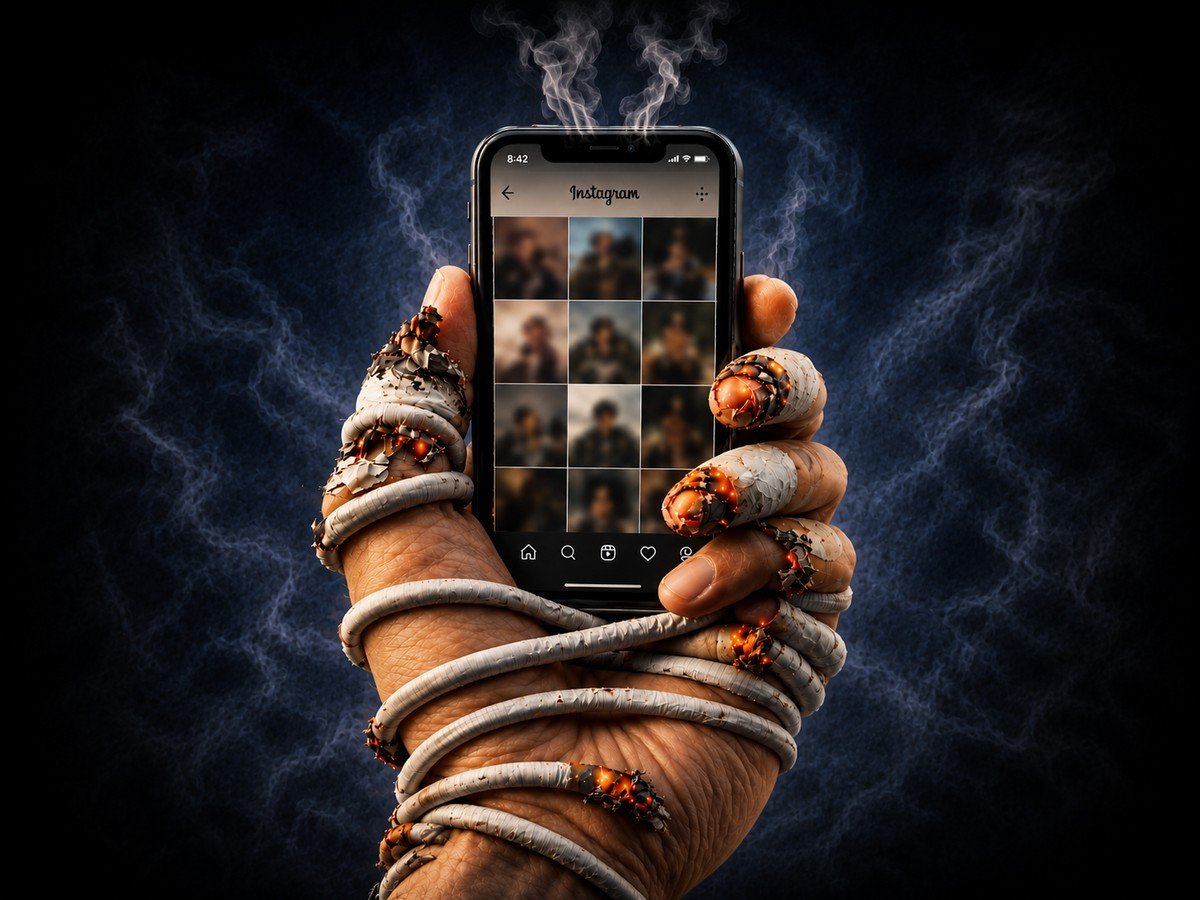
Mobile Addiction is a very dangerous fitnah of our time
Constant indulgence in useless distractions hardens and seals the heart. When the heart is continuously occupied, it loses its sensitivity to divine reminders. It becomes restless in silence and resistant to reflection. A distracted heart struggles to connect in Salah. A restless mind finds dhikr heavy. Qur’an recitation feels slow compared to the speed of scrolling.
One of the greatest spiritual dangers of excessive phone use is Ghaflah (heedlessness). When life becomes an endless cycle of notifications, entertainment, and comparison, the awareness of Allah fades into the background.
Moments that could have been used for reflection become filled with noise. Silence becomes uncomfortable. Solitude becomes frightening. Yet it is often in silence that hearts awaken. The Qur’an frequently calls believers to reflect, ponder, and remember. Reflection requires stillness. Stillness requires disconnection from constant stimulation.
Another serious concern is the type of content consumed. Much of social media and entertainment platforms expose users to the following:
- Immodesty and sexualized imagery
- Gossip and backbiting
- False information
- Envy-inducing lifestyles
- Mockery and vulgarity
“Tell the believing men to lower their gaze and guard their chastity… Allah is aware of what they do.” Surah An-Nur (24:30)

Mobile Addiction could quickly result in pushing us towards sins
Lowering the gaze today is not limited to the streets. It extends to screens. What enters the eyes enters the heart. Repeated exposure desensitizes the soul. What once felt wrong slowly feels normal. The spiritual danger of phone addiction is not only in wasted time but also in gradual moral erosion.
Islam does not demand the rejection of technology. Phones can be tools for:
- Beneficial knowledge
- Qur’an study and Islamic lectures
- Maintaining family ties
- Earning lawful income
- Spreading good reminders
The key principle is moderation and intention.
Before opening an app, one can ask: Why am I opening this?
Mobile phone addiction is not just a productivity issue. It is a spiritual, psychological, and moral challenge of our time. It quietly drains hours, fragments attention, weakens discipline, and clouds the heart. The believer understands that life is short. Time is limited. Every breath is counted. If we are to be asked about our pleasures, our youth, our health, and our time, then we must begin asking ourselves now before we are asked later. Putting the phone down is not simply an act of self-control. It can be an act of worship.
Imam al-Ghazali, in his monumental work Ihya’ ‘Ulum al-Din, wrote the following:
“Your time is your life, and the loss of time is worse than death.”
